
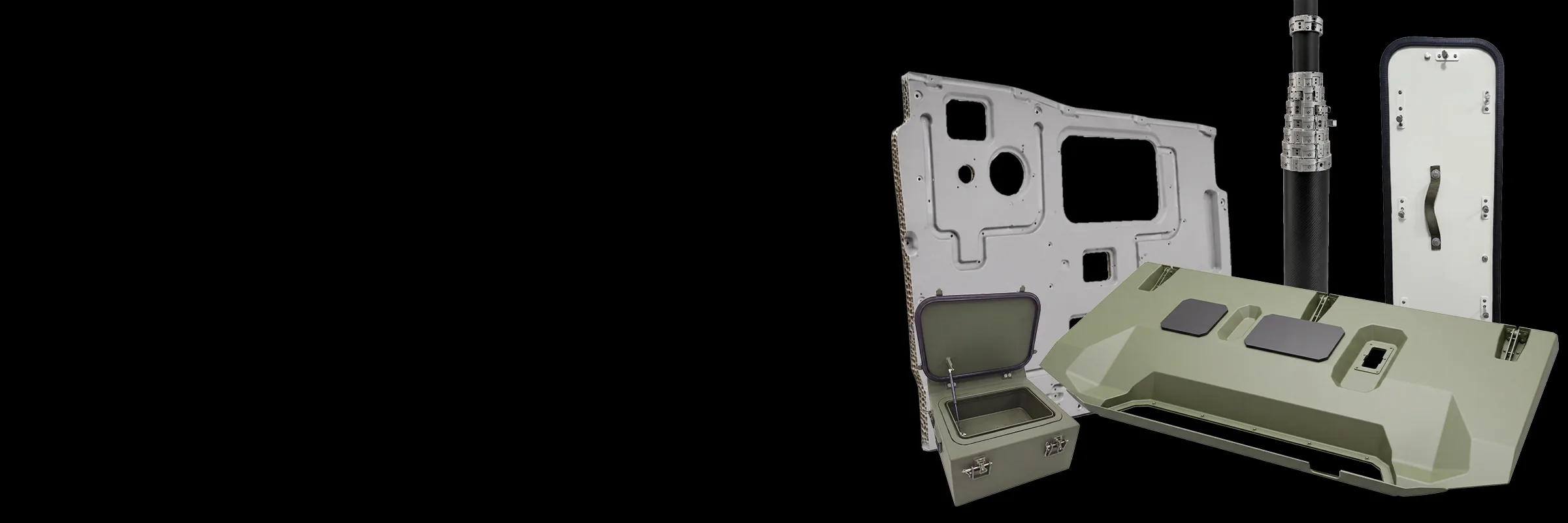
Platform-Integrated Composite Structures
We design and manufacture lightweight, durable and high-performance composite components for land, naval and air platform manufacturers. Parts are engineered to the platform: geometry, load case, environmental envelope and interface details are agreed with the OEM before tooling.
Depending on part geometry and load case, composite components typically reduce weight by 30 to 50 percent compared with their steel equivalents. Where the platform requires it, ballistic protection is integrated into the structure itself, allowing a single component to carry load, close the platform envelope and provide protection.
Our manufacturing capabilities range from hand lay-up, prepreg lamination and curing to resin infusion and the production of complete composite subsystems. We support design, prototyping and series production end to end, delivering structural composite solutions for land, naval and air platforms as well as civil and industrial applications.
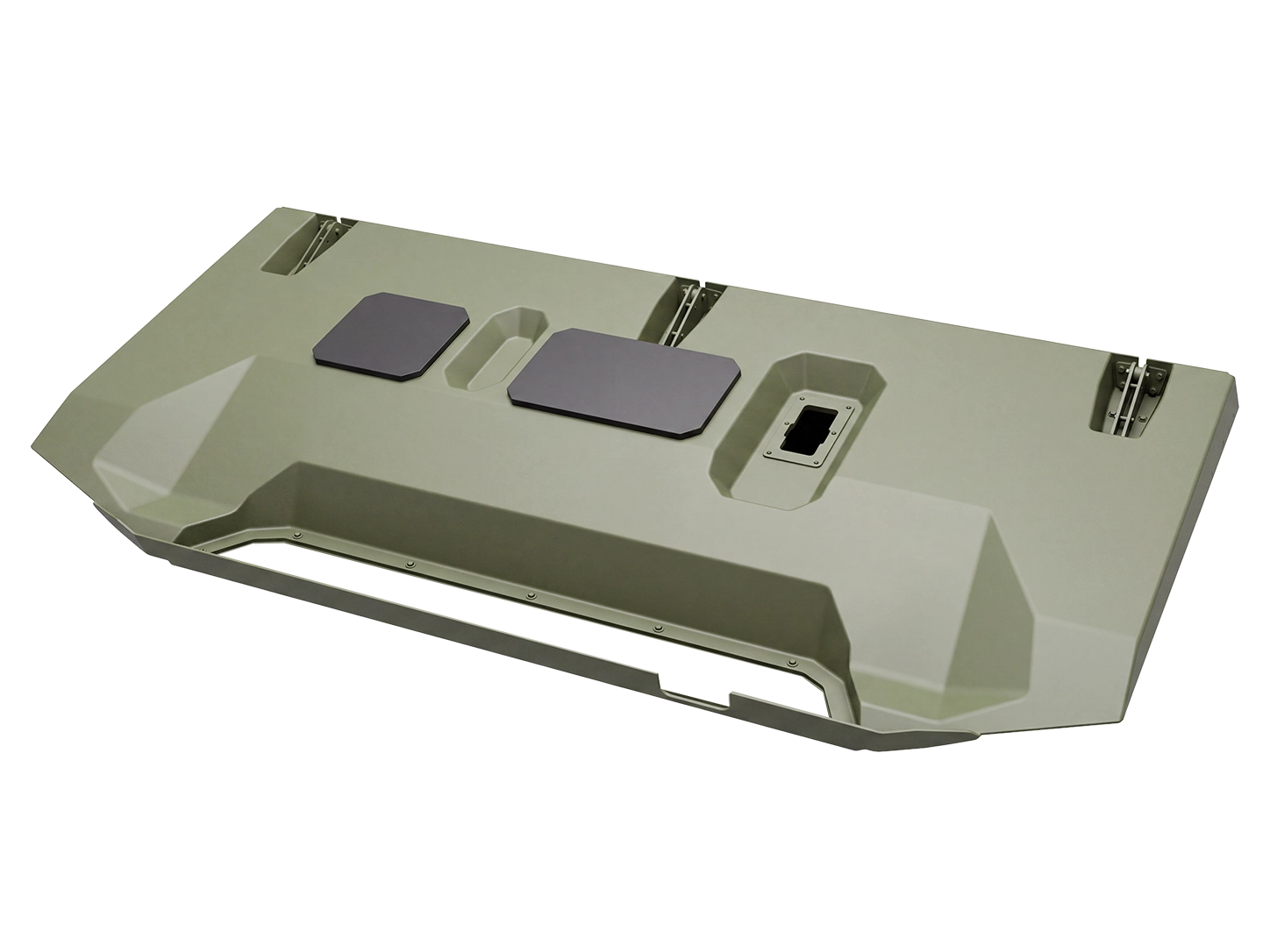
Exterior Composite Structures
Exterior composite structures are body components that close and protect the platform envelope while reducing overall structural weight. Panels are molded to the platform's surface geometry, allowing a composite component to replace a steel assembly without changing the platform's external profile.
Surfaces are finished for continuous outdoor service, while hinge, latch and sealing interfaces are integrated into the component rather than added afterward. Typical construction combines glass or carbon epoxy laminates in a sandwich structure with a UV- and corrosion-resistant gelcoat or polyurethane finish.
- Hoods
- Access panels
- Stowage boxes
- Equipment enclosures
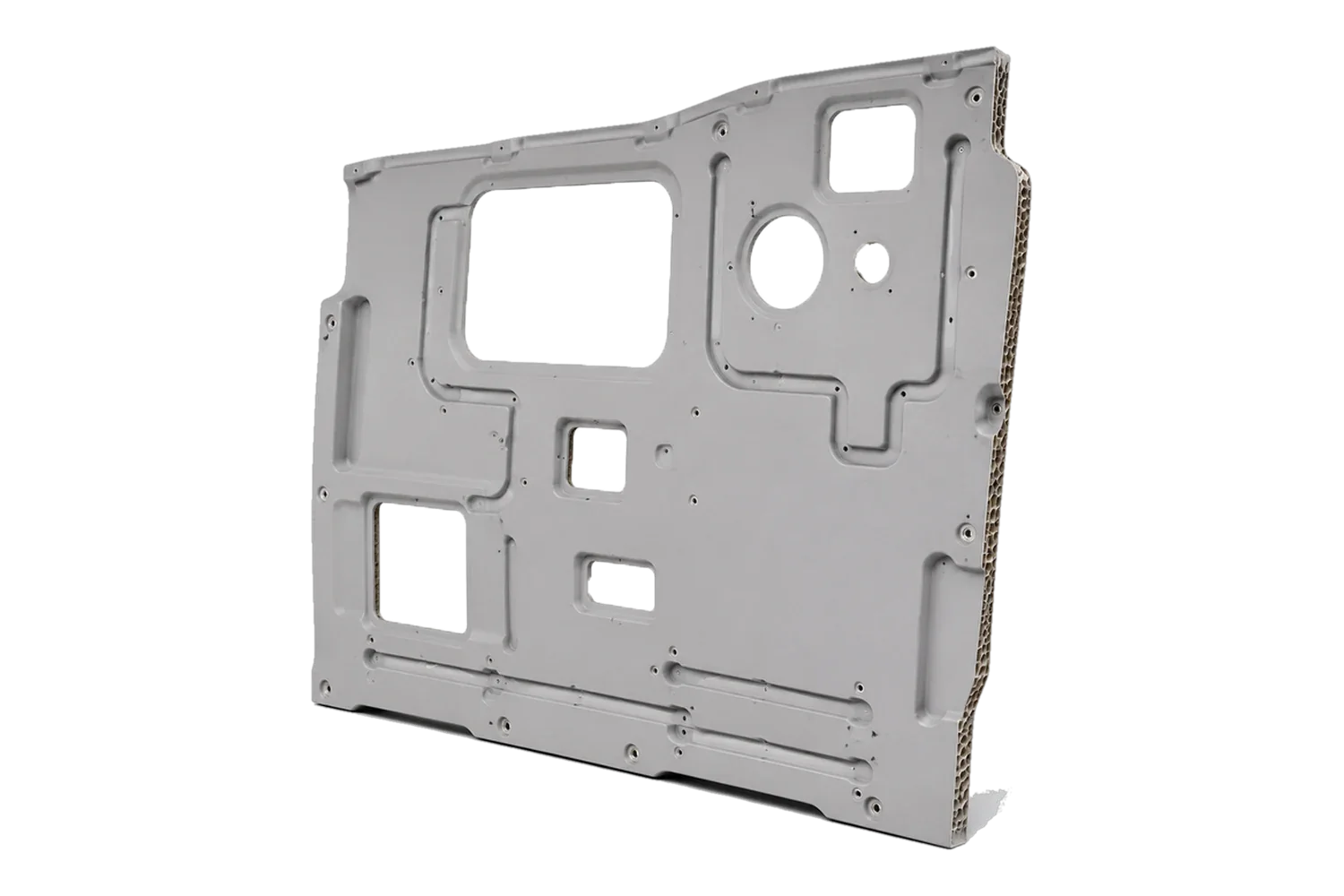
Interior Composite Structures
Interior composite structures are shaped to the cabin and manufactured to the platform's interior material requirements, carrying equipment and crew stations at low weight. Laminating cutouts, cable routes and mounting points into the component reduces the number of assembly parts and shortens installation time.
Where the interior is also a protected volume, the spall liner is integrated into the panel rather than installed as a separate layer. Naval and air platform interiors are manufactured and tested to the applicable fire, smoke and toxicity requirements before delivery. Typical construction combines phenolic or fire-rated laminates with honeycomb- or foam-core sandwich panels.
- Consoles
- Interior panels
- Maintenance hatches
- Equipment boxes
- Enclosures
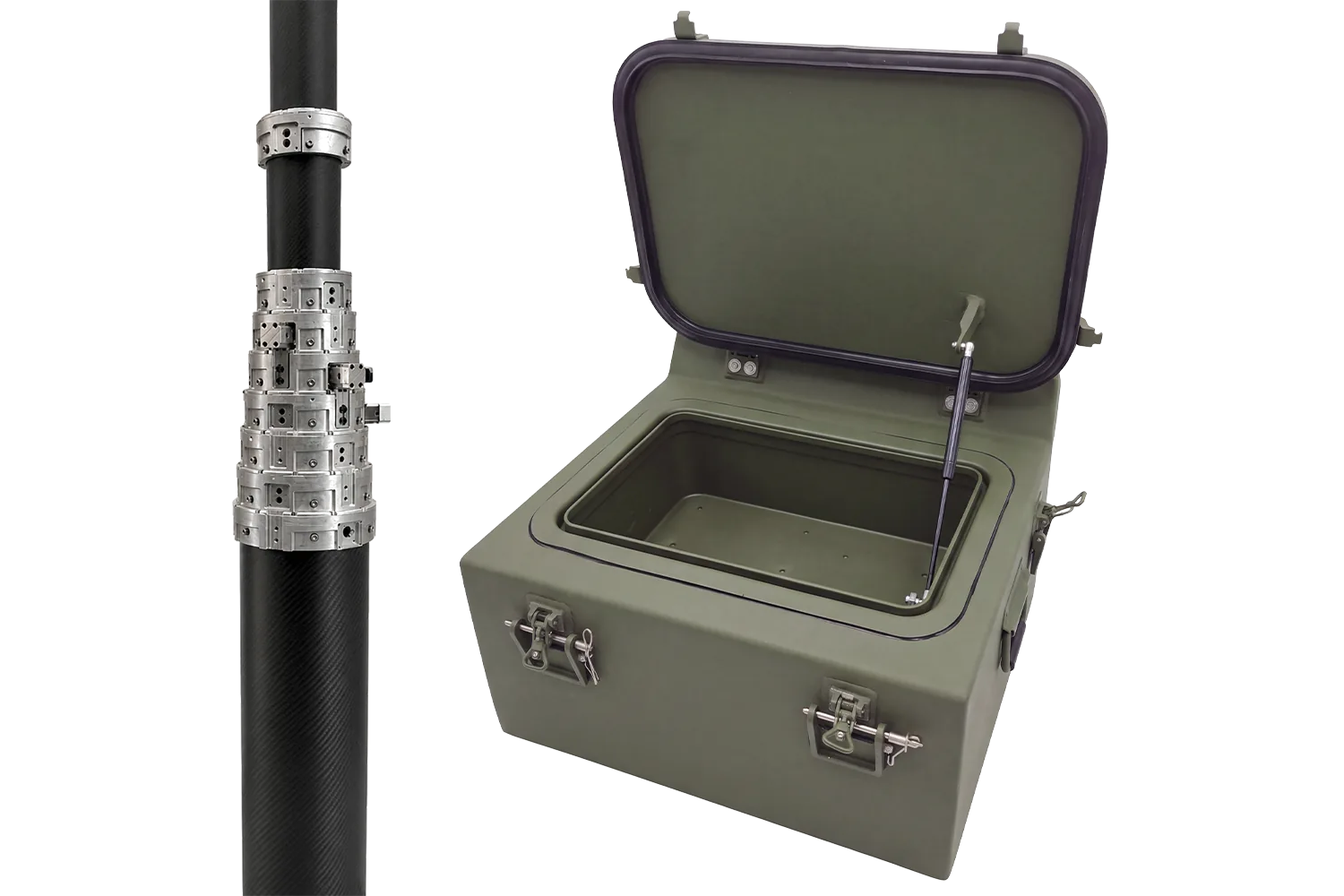
Structural Elements and Subsystems
Our structural elements consist of load-bearing components manufactured to tight tolerances, with bonded metallic interfaces at their connection points to the platform. In complete subsystems, the composite housing, the equipment it carries and the ballistic protection are delivered as a single tested unit.
Fiber orientation is defined by the load case, placing stiffness where the structure requires it. These structures typically use carbon epoxy tubes and profiles with verified dimensional tolerances and bonded metallic interfaces. Subsystems with ceramic-composite armor integrated into the structural housing are delivered tested and ready to bolt onto the platform.
- Mast tubes
- Load-bearing profiles
- Platform-specific structures
- Periscope armor
- Sensor housings
- Optical system housings
- Integrated assemblies
Advanced Engineering, Tailored to Your Needs
Every platform, threat and operating environment brings different requirements. Tell us about your needs, and our engineering team will work with you to define the right protection solution.